
Gems. Jewels. Nuggets.
Take what you need. Leave the rest.
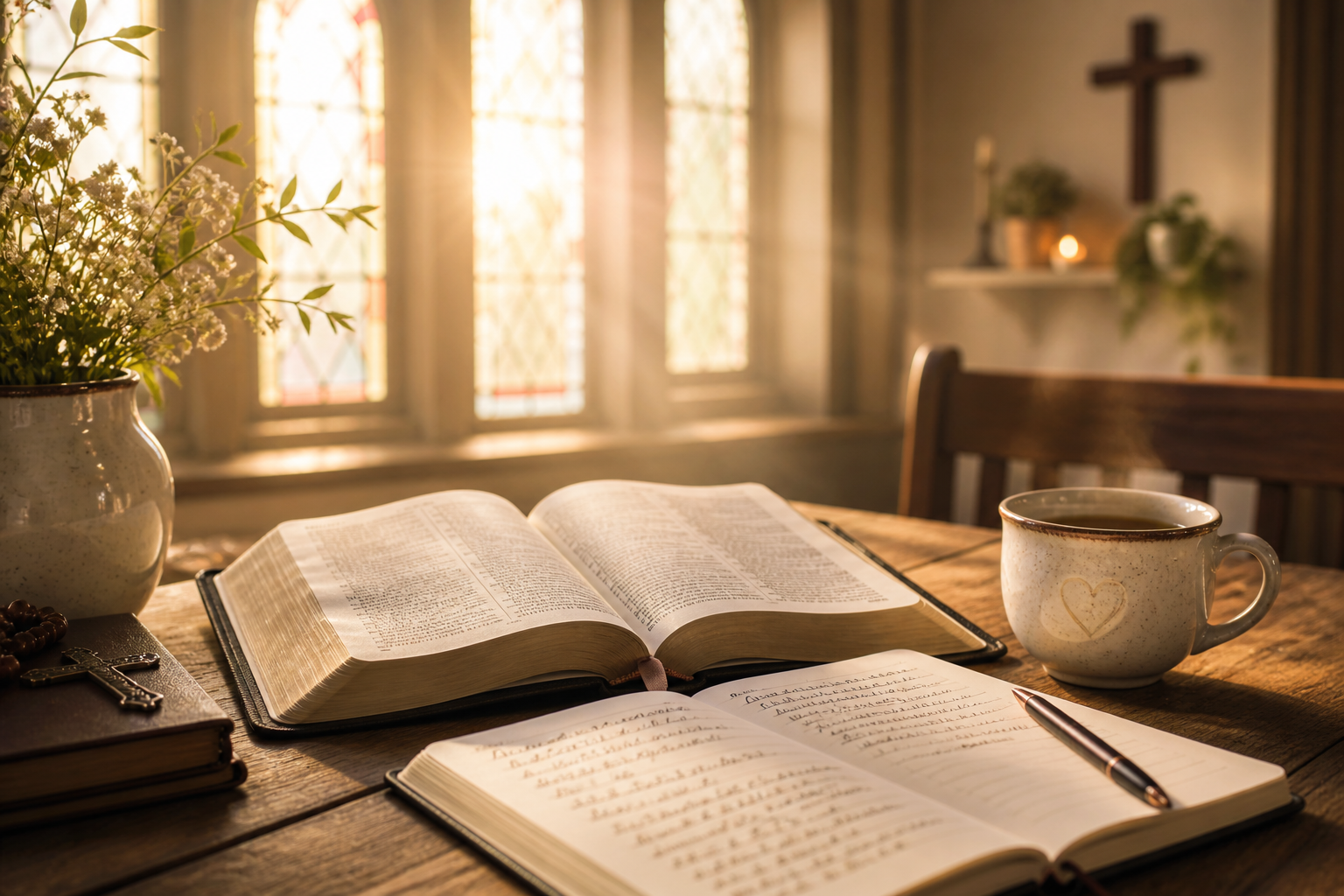
When Faith Feels Fragile: Learning to Trust Again
When life feels uncertain, faith becomes the anchor. A reflection on finding strength, surrender, and light in the storm—one moment at a time.
When faith feels fragile, it rarely announces itself.
It slips in quietly—like a crack in a windowpane, a slight draft that makes you shiver even when the sun still shines. Mine began with a single verse I couldn’t bring myself to say:
“As we forgive those who trespass against us.”
Those words lodged in my throat like stones. My hurt ran deep—so deep it rattled the foundation of what I believed about God, grace, and love itself. Every time I prayed The Lord’s Prayer, my voice faltered at that line.
It wasn’t rebellion; it was grief.
The Breaking Point
Then came Sister Jane.
She wasn’t loud or imposing; her strength lived in stillness. Week after week, we sat together with Scripture spread before us—some days in quiet, others through tears.
She didn’t rush my process.
She didn’t tell me to “just move on.”
She invited me to sit in the ache until I could hear God whisper through it.
Healing didn’t arrive with lightning.
It arrived like sunrise—slow, patient, and steady.
Relearning Trust
One afternoon, while reading Psalm 34, a phrase stood out:
“The Lord is close to the brokenhearted.”
Not the strong.
Not the unwavering.
The brokenhearted.
In that moment, I realized my fragility wasn’t faithlessness—it was the very soil where faith grows.
When Faith Shakes, Grace Holds
We tend to think strong faith means never wavering.
But sturdy faith?
It trembles.
It questions.
It wrestles.
And that’s where it becomes real.
The Takeaway
If you’re struggling to forgive, start by being honest about it.
Say it.
Write it.
Let it breathe.
Healing doesn’t demand perfection—it asks for permission.
And when you finally whisper the words “as we forgive,”
you may find they sound lighter… freer… truer.
—
Reflection:
Have you ever struggled to forgive—and found freedom when you finally let go?
Affirmation:
Forgiveness isn’t about forgetting; it’s about freeing your heart to heal.
Nourishment, Held
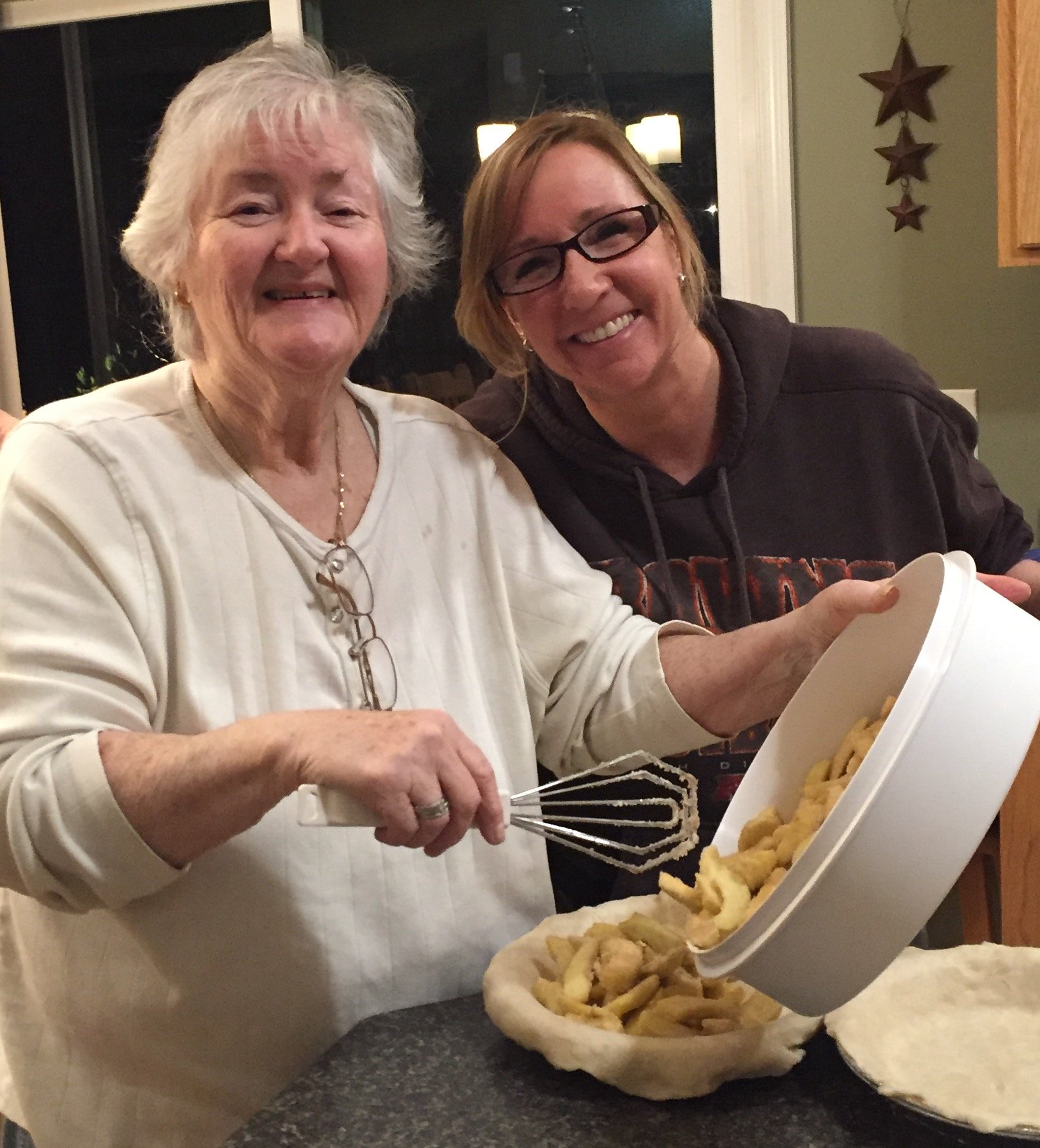
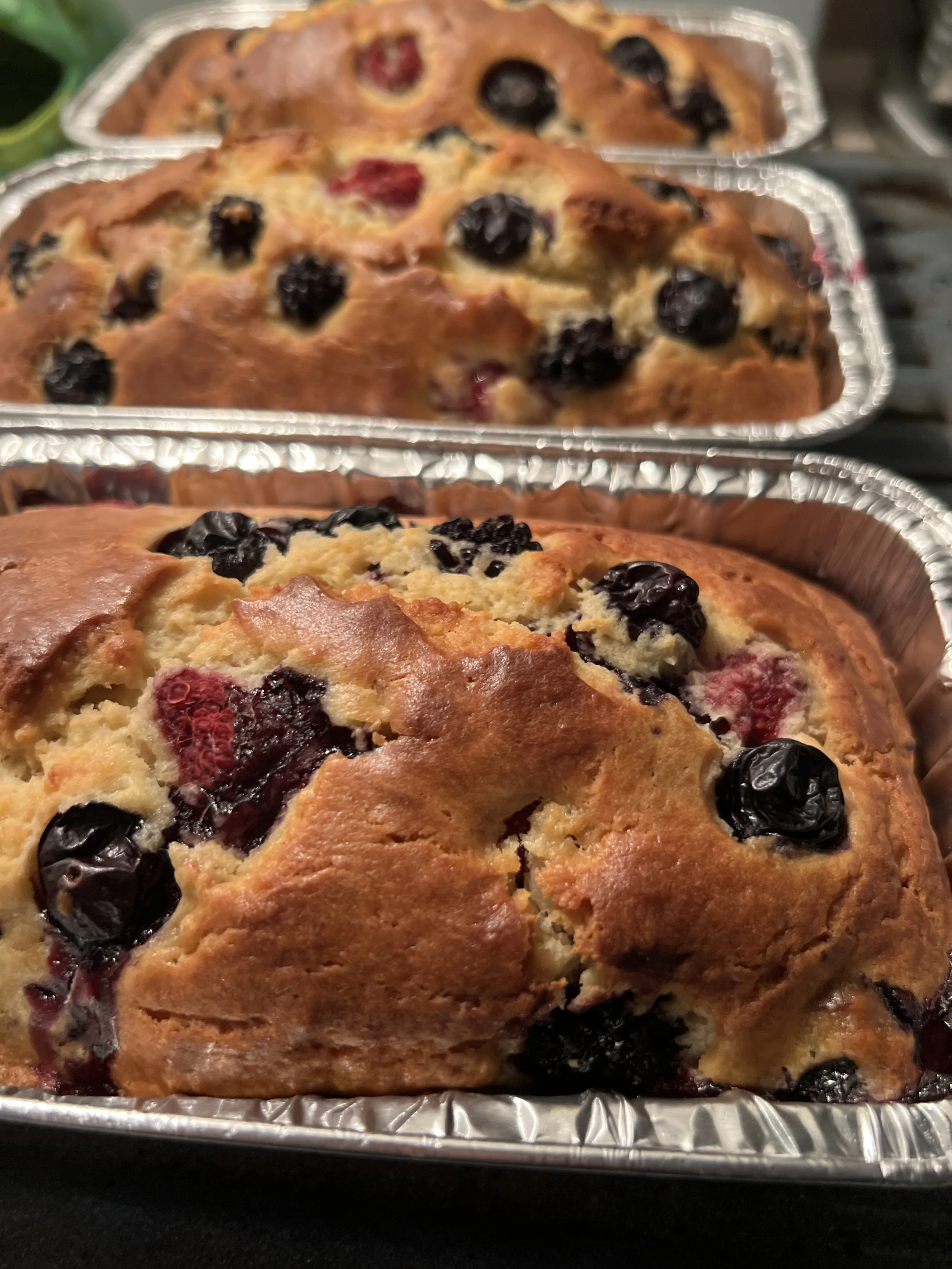
This is what nourishment looks like.
FOOD SERIES INTRODUCTION
Food has never been just food for me.
It’s been care.
Stability.
Memory.
Survival.
And, over time, self-trust.
This series exists because so much of what we’re taught about food is rooted in shame, control, or perfection—and that has never reflected my lived experience. I wasn’t raised around restriction. I was raised around responsible health, nourishment, and balance—without obsession.
Over the decades, my relationship with food has evolved. Life changes you. Illness changes you. Caregiving changes you. And still, food remains one of the most consistent ways we care for ourselves and one another.
Nourishment, Held is not about diets.
It’s not about “good” or “bad” foods.
And it’s not about performance.
It’s about:
Feeding bodies without moral judgment
Understanding cravings without guilt
Honoring memory, culture, and care
Making peace with change
And learning how to nourish ourselves honestly, in the season we’re in
Some posts will be reflective.
Some will be practical.
Some will include recipes.
Some will simply tell the truth.
All of them come from the same place:
food as something meant to support life—not control it.
About This Series
Chronic illness reshapes everything—identity, capacity, calling. This series explores what it means to rebuild with intention, steward pain with faith, and transform suffering into service.
Recovery, Meaning, and the Patterns That Change a Life
This series was shaped by a conversation that articulated something I had lived long before I could name it. In his appearance on The Diary of a CEO, Tony Robbins speaks candidly about suffering, pattern recognition, emotional state, and the responsibility to reduce pain—not through denial, but through understanding how meaning, physiology, focus, and action interact.
What struck me most was not the promise of transformation, but the insistence on pattern recognition: the idea that fear, overwhelm, and stagnation persist when we fail to recognize the forces shaping our reactions and decisions. Robbins argues that suffering intensifies when people are stuck in reaction instead of recognition, and that recovery—whether physical, emotional, or financial—requires learning to see patterns clearly and respond deliberately.
This series applies those frameworks to places they are rarely explored openly: chronic illness, medical misdiagnosis, recovery culture, faith, financial rebuilding, identity loss, and service. These essays are not endorsements or summaries. They are reflections on what it looks like to apply Robbins’ strategies when the body is compromised, the system fails, and survival itself requires creativity and pacing.
Grounded in faith, informed by recovery, and oriented toward service, this series explores how responsibility, compassion, and contribution can coexist with medical reality, personal limits, and honest dependence on God rather than denial of the body.
Across eight posts, I examine how story shapes state, how state governs behavior, and how small, consistent shifts—one bite at a time—can restore agency even when circumstances remain difficult. This is not about eliminating struggle. It is about reducing unnecessary suffering by learning to recognize patterns, honor reality, and build a life that can be sustained.
Footnotes / Source
The Diary of a CEO, interview with Tony Robbins, January 2026
Leadership, Legacy, and the Season of Becoming
A reflection on solitude, chronic illness, and choosing nourishment without postponing joy.
By late February, winter has usually said enough.
The calendar has moved us through reflection, remembrance, and resolve—and families, like the season, often stand at a threshold. Not finished. Not fully renewed. Just preparing for movement.
This feels like the right moment to pause.
What We Remember Shapes What We Build
January and February invite families to remember.
We remember beginnings on New Year’s Day—what we hoped for, what we promised, what we carried forward whether we meant to or not.
We remember the life and legacy of Martin Luther King Jr., whose work reminds us that justice is not abstract—it is practiced daily, in homes as much as in public spaces.
We honor Black history not as something finished, but as something still shaping our collective story.
These observances are not meant to live only in headlines or classrooms. They are invitations for family conversations about truth, justice, and repair.
What are we modeling for the next generation?
What stories are we willing to tell fully—not selectively?
Where does repair matter more than being right?
Leadership Starts at Home
Presidents’ Day often passes quietly, but it raises an important question:
What kind of leadership do we practice in private?
Public leadership is visible.
Family leadership is lived.
In families, leadership looks like:
How we handle conflict
How we talk about history
How we respond when someone changes
How we repair when we get it wrong
Authority without humility fractures families.
Leadership with integrity builds trust.
Waiting, Cycles, and the Turn Toward Spring
Groundhog Day makes light of waiting, but waiting is real work—for families especially.
Waiting for understanding.
Waiting for reconnection.
Waiting for growth that can’t be rushed.
The Lunar New Year reminds us that cycles matter. Strength is not always loud. Endurance counts. Movement comes after stillness.
Spring doesn’t arrive because we demand it.
It arrives because the conditions finally allow it.
Families work the same way.
Holding Without Gripping
Across this series, one truth has remained:
Families don’t need more pressure—they need room to grow.
Repair matters more than perfection.
Truth matters more than comfort.
Leadership inside families is less about control and more about modeling courage, accountability, and presence.
We don’t finish family work in winter.
We prepare the ground for what comes next.
Questions to Carry Forward
As we move toward spring, consider:
What values are we modeling without realizing it?
Where does our family need repair instead of judgment?
How do we talk about justice and truth at home?
What does leadership look like in our closest relationships?
What are we ready to release—and what still needs holding?
There are no perfect answers.
But asking the questions is how families stay held—even as they change.

The Sparkle of Gratitude: Finding Joy in Small Victories
Faith
Gratitude doesn’t erase pain, but it reframes the day so light can find a way in. Small victories become signposts that point us back to God’s steady kindness.
Last week, two people I know shared beautiful news: they no longer need their walkers to get around. One is a repeat client of my home and pet care business. The other just had back surgery. Both were ecstatic—and I understood why. Healing is often a mosaic of tiny tiles, and some days a single tile shines bright enough to change the whole picture.
5 tiny things I thanked God for this week
A steadier step
Watching two friends put their walkers aside reminded me that progress can be quiet for a long time, then suddenly visible. Thank You for muscles relearning, nerves rewiring, and courage returning one hallway at a time.
A warm mug and a pain lull
The ache didn’t vanish, but there was a soft hour where it dimmed. Thank You for tea that stayed hot and the grace of a gentler afternoon.
A clear word where fog usually sits
The sentence came without stutter or search. Thank You for the little mercy of clarity when the brain is tired.
A text that said “thinking of you”
No fixes. No advice. Just presence. Thank You for love that stays without needing to be loud.
Twenty good minutes
Enough energy to fold towels and open a window. Thank You for ordinary strength that feels like a miracle on the right day.
Gratitude as a spiritual discipline
Gratitude is not denial. It is discipleship. It trains the eyes to find God’s nearness in common hours. It turns survival into worship. Over time, it shapes suffering into purpose and peace—like a lens that slowly brings what matters into focus. We practice not to earn favor, but to recognize it.
Lord, teach us to number small mercies so we do not miss Your great faithfulness.
💬 List one small victory from your week in the comments.

The Space Beside Me
In memory of Richard — the gentle rhythm that once echoed beside mine.
“Every space once shared carries the echo of a life well-lived.”
It’s strange, the way silence can hold a memory.
Sometimes it’s not the absence of sound, but the absence of a soul.
Richard’s car had always been there—his steady rhythm beside mine in the garage, his quiet presence tucked between concrete and daybreak.
He was thin and mostly bald, his gait slow but sure, the cane an extension of his will. We’d exchange our small pleasantries, those little gifts of humanity that mean more than we admit.
Then, one day, the space beside me was empty.
And it stayed that way.
Mom told me he’d been in an accident—something about his eyes, and a rental car too big to park.
I felt the kind of relief that comes with conditions—grateful he was alive, uneasy that I hadn’t seen him.
He’d told her not to worry about him, she said. That’s the kind of man he was—quietly independent, gently proud.
Still, the silence had a pulse.
Still, I worried.
This morning, as I packed my bag for an overnight stay with Snow White Willa and the Seven Kitties, the world broke open with sirens.
Red and blue light strobed through the autumn leaves, reflecting off my window like ghosts of the living and the gone.
From my third-floor view, I watched as a gurney rolled out but returned with nothing more than a red and black backpack—the final footprint of a life folded neatly away.
Mom later told me she’d seen sheets on the ground.
“It looked like a mound of snow,” she said softly.
And in her voice was a tremor I recognized—the sound of grief trying to stay composed.
By the time I passed the garage, the air had thickened. Cameras flashed toward the balconies. The world had gone dim, even though the sun was still shining.
Hours later, when Mom called, she didn’t have to say his name.
I already knew.
“It was Richard,” she whispered, and the words lingered like the faintest prayer.
Now, rain falls against the windows where I sit with Willa and her cats.
The air smells of damp leaves and fur, and the rhythmic purrs sound like small engines of comfort.
Outside, autumn’s colors burn brilliantly—yellow, orange, crimson—a holy fire fading into the earth. The sun keeps slipping behind clouds, like it can’t decide whether to mourn or to bless.
I sip my tea and listen to the rain’s steady percussion, and in that rhythm, I hear Richard’s cane again.
Tap… pause… tap.
The gentle insistence of a life that kept moving, even when the steps grew slow.
The space beside me remains empty now,
but somehow—
I don’t think it ever truly will be.